Key takeaways
- Veneers look artificial when the shade, shape and size come from a template rather than your face.
- Natural work is planned around your lips, face and bite, with subtle texture and variation between teeth.
- Healthy gums and teeth come first, and grinding or clenching must be part of the plan.
Most people can spot veneers that look like veneers. The teeth are too white, too uniform, too large or too flat, and the smile no longer looks like it belongs to the person wearing it. Natural looking aesthetic work is far less noticeable, and that is exactly the point.
What a veneer is
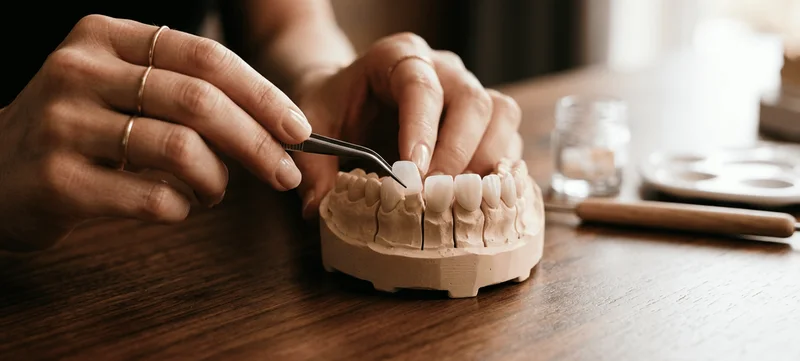
A porcelain veneer is a thin shell bonded to the front surface of a tooth. Veneers can refine the color, shape and proportions of teeth and close small chips or gaps when the teeth underneath are healthy and suitable. When a tooth needs more structural support, a crown that covers more of the tooth may be the better choice. Some situations are better served by whitening, bonding or orthodontics, and a good plan will say so.
Why some veneers look artificial
- A shade chosen to be as white as possible rather than to suit the person's skin, eyes and other teeth.
- Every tooth made the same shape and size, without the subtle variation natural teeth have.
- Surfaces with no texture, which reflect light like plastic instead of enamel.
- Teeth made too thick or too long because the plan started from a template rather than the patient's face.
- Work that ignores the bite, which can lead to chips, sensitivity or a change in how the teeth meet.
What natural work involves
Natural results start with the face. The length of the teeth is considered against the lips at rest and in a full smile, the midline against the face, and the shade against the rest of the mouth and the person's complexion. Small details such as translucency at the edges, surface texture and slight differences between neighboring teeth are what make porcelain read as enamel.

Health comes first. Decay and gum disease need attention before aesthetic restorations, and habits such as clenching or grinding should be discussed because they affect whether veneers are suitable and how they are designed. You can read more about how we approach this on our veneers and smile reconstruction page.
Why the laboratory matters
Veneers are handmade, and the ceramist's skill shows in the final result. At Palm Beach Dental Specialists our on-site laboratory works directly with the clinician, which makes it easier to refine shade and shape in person rather than by written instructions and photographs alone.
Caring for veneers
Porcelain veneers are cleaned like natural teeth, with brushing, flossing and regular professional visits. It is wise to avoid using your teeth to open packaging or bite very hard objects, and a night guard may be recommended if you grind.
Questions to ask about veneers
- How much of my natural tooth will need to be prepared?
- Can I preview the proposed shape before the final veneers are made?
- Are veneers the right choice for every tooth, or would some benefit from a different approach?
- How will my bite and any grinding be accounted for?